This Earth Day, take all of that learning and hold an extra or extended recess. Or go all out – host an Adventure Play Day!
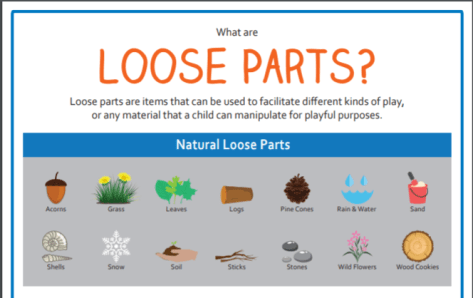
Hold an extra or extended recess: Demonstrate your school’s commitment to outdoor free play. Support accessible and inclusive play by bringing out loose parts. Consider setting up a temporary mud kitchen!
Host an Adventure Play Day: Provide an opportunity for students to connect to nature through outdoor play by hosting an Adventure Play Day! Provide a variety of natural and upcycled materials (loose parts), and transform your schoolyard into an adventure playground where all sorts of neat and unexpected things can be created, constructed, and organized.
How to host an Adventure Play Day
Set up a play day team
Gather a core group of five to six staff to facilitate this fun day! Put together a team of play champions: two teachers, an administrator, a couple of parents, and maybe a caretaker to lead the collection and organization of loose parts and event delivery.
Announce the day
Let the whole school know! Spread the word via student-made posters, social media, newsletters, and morning announcements.
Start a loose parts collection
Four loose parts per child will likely ensure you will have enough loose parts for everyone. They should be easy-to-source, free, or reusable materials that can ideally be recycled after the day.
Plan to cycle between 60-100 children through 60-90-minute play sessions
Play should not be rushed. The reality of recess and lunch hours will hopefully not have to apply to your play day. Depending on the size of your school, we also recommend mixing age groups!
Assess the space you will use for this event
It’s helpful to designate an adventure play section in the playground – about a baseball diamond size space (excluding the outfield), preferably including sand/mud, and not too far from a water source. Supervision won’t be spread out too far and the rest of the playground will be available for other children during the day. Identify the perimeter of the play area and where loose parts will be placed (e.g. a cardboard tube placed near a sandpit will often become a tool for digging and exploration).
On the big day, consider how you will lay out the loose parts
Avoid creating obvious play stations but spread out loose parts with hints as to how they might be used. Not all of the loose parts need be laid out on the site initially. Try introducing new parts as some things become too worn for play.
Supervising play on your big day
When given the freedom to play with loose parts, students will surprise you with new and creative ways to play! This can be a challenge to supervise, and requires that you balance the opportunity for students to direct their own play with the rules of the playground and risk of injury. Rather than over-policing play, focus on three simple rules: stay within the boundaries, everyone helps clean up, and have fun!
Tidy up
Be sure to include tidy up time in your schedule. Have students re-organize the play field for the next group. Make sure supervisors have transition time between groups to rest and regroup. At the end of the day, sort the waste from the stuff you need to return or store. Be extra nice to your caretakers as they will have the extra work of making sure that waste is properly recycled or disposed. Thank them!
The Mission Spring/Summer 2019 Leisure Guide has been published!
There are lots of opportunities to be active over spring break. Click here to read the guide and find times for swimming, skating and more!
Go Noodle is a great website for encouraging fun physical activity at home or in the classroom. They create videos full of fun movement games and dances. Check out these sample videos and get moving!
This message is from the First Nations Child & Family Caring Society of Canada (FNCFCS) website:
“Have a Heart Day is a child and youth-led reconciliation campaign that brings together caring Canadians to help ensure First Nations children have the services they need to grow up safely at home, get a good education, be healthy, and be proud of who they are.
Watch “End the Gap – Fair Funding For First Nations Schools”
Host a Valentine’s Day party to raise awareness in your school or community. Choose a day leading up to Valentine’s Day that makes sense for your class or community.
Spread the word through social media like YouTube, Twitter, and Facebook. Use the hashtag #HaveaHeartDay.
Through activities like Have a Heart Day, we are creating a movement where the landscape of Canada is only one of honour and possibility for First Nations children.”
FNCFCS also shared this music video by N’we Jinan Artists “Important to Us”, written and performed by students at Pierre Elliot Trudeau School.
It’s a great time of year to set goals for new learning challenges and adventures. Watch the videos below for an introduction to the idea of using a ‘Growth Mindset’ as you learn new ideas this year.
“December 10th commemorates the day when the United Nations General Assembly adopted the Universal Declaration of Human Rights (UDHR). Translated into almost 500 languages, the UDHR details the fundamental rights of citizens around the world. Each year, we are reminded of our collective responsibility to stand up and defend these rights not only for ourselves, but also on behalf of those who may not be in a position to do so.”
2020 Theme:
Recover Better – Stand Up for Human Rights
“Human Rights must be at the centre of the post COVID-19 world.
The COVID-19 crisis has been fuelled by deepening poverty, rising inequalities, structural and entrenched discrimination and other gaps in human rights protection. Only measures to close these gaps and advance human rights can ensure we fully recover and build back a world that is better, more resilient, just, and sustainable.
End discrimination of any kind: Structural discrimination and racism have fuelled the COVID-19 crisis. Equality and non-discrimination are core requirements for a post-COVID world.
Address inequalities: To recover from the crisis, we must also address the inequality pandemic. For that, we need to promote and protect economic, social, and cultural rights. We need a new social contract for a new era.
Encourage participation and solidarity: We are all in this together. From individuals to governments, from civil society and grass-roots communities to the private sector, everyone has a role in building a post-COVID world that is better for present and future generations. We need to ensure the voices of the most affected and vulnerable inform the recovery efforts.
Promote sustainable development: We need sustainable development for people and planet. Human rights, the 2030 Agenda and the Paris Agreement are the cornerstone of a recovery that leaves no one behind.” (United Nations, 2020)
What are human rights? How are we connected to the Universal Declaration of Human Rights ?
Watch the videos below and think about our responsibilities to ourselves, our families and our communities.
Have you heard of UNDRIP? Watch the video below to learn about Indigenous rights.
“The resources featured this month will inspire younger students to think critically as active citizens while they examine the concept of fairness as it relates to a situation in a fictional community.”
“Downloadable activities to accompany the award-winning book ‘We Are All Born Free’ – thirty beautiful illustrations that interpret our human rights for ages 5+.
Illustrators include Axel Scheffler (of Gruffalo fame), Korky Paul and John Burningham. The activities available to download below introduce the Universal Declaration of Human Rights (UDHR) through creative writing and story-telling.”
We Are All Born Free can be ordered from the Amnesty shop.
‘Amnesty’s delightful book We Are All Born Free explains the importance of human rights through truly beautiful illustrations. It is clear, simple and uplifting and makes it very easy to raise difficult subjects, even with young children. It is a wonderful educational tool and I strongly believe that every school should own a copy.’ Actress and author Emma Thompson
The Hour of Code is celebrated in early December each year, but you can participate year round! Watch the videos below to be inspired by the idea of creating and computational thinking.
You can try coding with any type of device. You can try coding without a device! Code.org has activities for trying coding on all kinds of tools and paper activities as well.
Remember, you need your family’s permission if you want to try coding on an app or program that asks you to create an account or for any of your personal information.
Your teacher librarian might even have some books about coding in the school library!
The Hour of Code started as a one-hour introduction to computer science, designed to demystify “code”, to show that anybody can learn the basics, and to broaden participation in the field of computer science. It has since become a worldwide effort to celebrate computer science, starting with 1-hour coding activities but expanding to all sorts of community efforts. Check out the tutorials and activities. This grassroots campaign is supported by over 400 partners and 200,000 educators worldwide.
When is the Hour of Code?
The Hour of Code takes place each year during Computer Science Education Week. The 2016 Computer Science Education Week will be December 5-11, but you can host an Hour of Code all year round. Computer Science Education Week is held annually in recognition of the birthday of computing pioneer Admiral Grace Murray Hopper (December 9, 1906).
Why computer science?
Every student should have the opportunity to learn computer science. It helps nurture problem-solving skills, logic and creativity. By starting early, students will have a foundation for success in any 21st-century career path. See more stats here.
How do I participate in the Hour of Code?
Start planning here by reviewing our how-to guide. You can organize an Hour of Code event at your school or in your community — like in an extracurricular club, non-profit or at work. Or, just try it yourself when Dec. 5 arrives.
Who is behind the Hour of Code?
The Hour of Code is driven by the Hour of Code and Computer Science Education Week Advisory and Review Committees as well as an unprecedented coalition of partners that have come together to support the Hour of Code — including Microsoft, Apple, Amazon, Boys and Girls Clubs of America and the College Board.
I don’t know anything about coding. Can I still host an event?
Of course. Hour of Code activities are self-guided. All you have to do is try our current tutorials, pick the tutorial you want, and pick an hour — we take care of the rest. We also have options for every age and experience-level, from kindergarten and up. Start planning your event by reading our how to guide.
What devices should I use for my students?
Code.org tutorials work on all devices and browsers. You can see more information about Code.org’s tutorial tech needs here. Tech needs for non-Code.org tutorials can be found on code.org/learn in the tutorial specific description. Don’t forget we also offer unplugged activities if your school can’t accommodate the tutorials!
Do I need computers for every participant?
No. We have Hour of Code tutorials that work on PCs, smartphones, tablets, and some that require no computer at all! You can join wherever you are, with whatever you have.Here are a few options:
Work in pairs.Research shows students learn best with pair programming, sharing a computer and working together. Encourage your students to double up.
Use a projected screen. If you have a projector and screen for a Web-connected computer, your entire group can do an Hour of Code together. Watch video portions together and take turns solving puzzles or answering questions.
I am in Canada. How do I participate internationally?
Anyone can organize an Hour of Code event, anywhere in the world. Last year, students worldwide joined together for the Hour of Code. Find out more here.
Do students need to log on using an account?
No. Absolutely no signup or login is required for students to try the Hour of Code. Most of the follow-on courses require account creation to save student progress. Also, signing up for the Hour of Code does NOT automatically create a Code Studio account. If you do want to create accounts for your students, please follow these instructions.
“An activity created by the Canadian War Museum to help students understand the First World War from a soldier’s perspective. The activity’s interactive nature and its animation-based format will appeal to younger students. Includes a glossary of terms. (Recommended for ages 10 and up.)”
Author Katie Davis produced this video with quotes from beloved and famous authors and illustrators all answering the same question;
“What is a picture book?”
For Students:
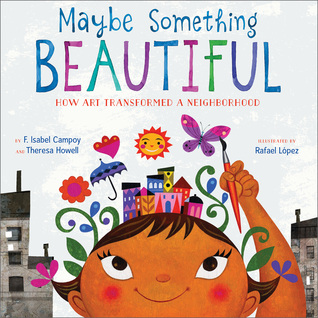
What is a picture book to you? Do you have a favourite picture book? Visit your school library to borrow picture books this month.
You might like these books for “Roc Your Mocs” Day in November:
Calendar:
How the Calendar Works
“Each day, an author/illustrator, our Picture Book Month Champion, is listed. On that day he/she has an essay posted on the Picture Book Month website about the importance of picture books. Check back every day of November for a new essay.
Each day is also marked with a theme. Use these daily themes to plan story times, blog about your favorite picture books in that theme, or create themed displays.” (Source: Picture Book Month, Calendar)
For Teachers:
Picture Book Month Teacher’s Guide (Ideas for using picture books in ELA, Science, Math and Social Studies)
“October 31 to November 4, 2016 is Media Literacy Week! This year’s theme is Makers & Creators and focuses on all the ways young Canadians can become more creative, innovative, and entrepreneurial by embracing media production, remixing, maker, and DIY culture and coding.”
Here is a sample video from the ‘Media Minute’ series – a unit of videos and lessons designed specifically for elementary students.
Autumn is a season full of rich traditions and celebrations in many cultures and nations. It is a wonderful time to get outside and use all of your senses to observe changes on the land, in the air, and along our waterways.
Many schools are learning about apples, pumpkins, salmon and other food sources that are ready to harvest at this time of the year. There are wonderful books in your school library about cycles of growing, visiting farms, and autumn traditions.
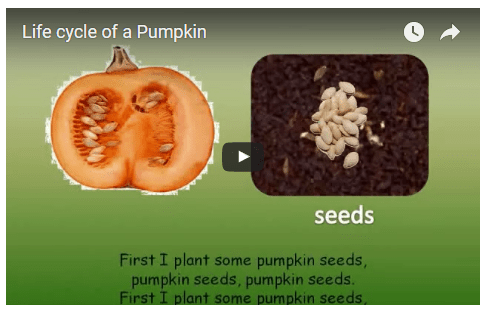
Here is a song about the life cycle of a pumpkin:
Do you have a favourite fall activity? What do you like about this season? Do you have a favourite autumn meal in your family and/or community?
Better Together BC is a great place to find family-friendly recipes and resources. Here are a few highlights that you might like to use at home or at school:
“Spatulatta teaches children to cook with free step-by-step videos. It encourages children to take pride in their accomplishments in the kitchen and to understand the connection between farm and dinner table. It also encourages children to ask their family members and friends for recipes and to cook those dishes together.” (Better Together BC)
For teachers:
My Seasonal Round was shared by Dewdney Elementary as an integrated unit for elementary Social Studies and Science.
“This unit illustrates the integration of Social Studies and Science. The seasonal round was chosen as a theme for this unit because it lends itself well to integrating the topics of BC First Nations study in Social Studies, and habitat in Science.”
Local Event: Mission Fire/Rescue Service, Fire & Life Safety Fair, October 2, 2016 from 1-4 pm at Fire Station No. 1, located at 33330 – 7th Avenue, Mission. They will share important safety information on burn awareness and prevention along with interactive games and fun activities for the entire family.
























 Rukhsana Khan
 Rob Scotton
 Ame Dyckman








 School District 75 Elementary Virtual Learning Commons