 From the League of Canadian Poets:
“Celebrate National Poetry Month 2025 using the theme FAMILY in its many forms: found and chosen family, birth family, and family that defies categorization.
This April, turn to poetry to celebrate, cherish, mourn, critique, and explore the myriad bonds that family forms in our lives. Parents, pets, friendships, soulmates, siblings, plants, and beyond: the League invites you to examine the shape of family in your life now, to witness the intergenerational impact of ancestors, and to consider the role of family in generations to come. “
- Selections from: Tea and Bannock Stories: First Nations Community of Poetic Voices (Simon Fraser University, First Nations Studies. Compiled by annie ross, Brandon Bob, Eve Chuang and the Chuang Family, Steve Davis, Robert Pictou)


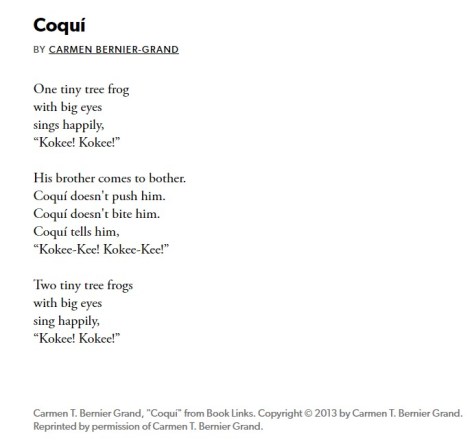
2. Selections from Poetry Foundation: Poetry for Children


Ideas for Teachers: (from the League of Canadian Poets)
Poetry Play Stations
Poetry play stations use different techniques to encourage young readers to craft poems. Here are some great stations to include:
Erasure poetry: Using a page of existing text, use a black marker to complete cross out sections of the text — the words or phrases that remain can be strung together to form an original poem! Part of the beauty of erasure poem is how the entire page looks when completed, blacked-out sections and all. Try it with a newspaper article!
Found poetry: Found poetry is very similar to erasure poetry — well, erasure poetry is a kind of found poetry — but with a little more freedom. Again using an existing text, participants select words or phrases from the text that they think will make a great poem: using the found words and phrases, they can play with line breaks, stanzas, and other ways of construction an original poem from the found text!
Book spine poetry: This is a great poetic experiment that takes over Twitter every April — using as few as three or as many as… well, as many as you can stack, create a poem using the titles of books as they appear on the spines. These make excellent photos and are great for sharing!
Magnet poetry: A classic! Choosing words from a pile of individual words to string together an original poem. This could be from a magnetic poetry set, but you could also simply prepare an assortment of words for participants to choose from.” (Source: League of Canadian Poets)
Additional Resources:
“Every National Poetry Month we present Dear Poet, a multimedia education project that invites young people in grades five through twelve to write letters in response to poems written and read by award-winning poets.”
 School District 75 Elementary Virtual Learning Commons
